Let’s take a closer look at how our fulldome show was made! Peak behind the curtain and read about our adventurous production!
At the beginning, there was nothing else, but a first idea and the topic ”preserving the environment”. Well, to be honest, there was a bit more than just this. We had a plan to create a fulldome movie, we had a team of friends and colleagues willing to exchange hundreds of e-mails over the coming two years and the opportunity for the project to be funded by the Erasmus+ program. Therefore, we submitted a project proposal and as soon as it got accepted, we sat down together in Brno Observatory and Planetarium and started an intense brainstorming session.
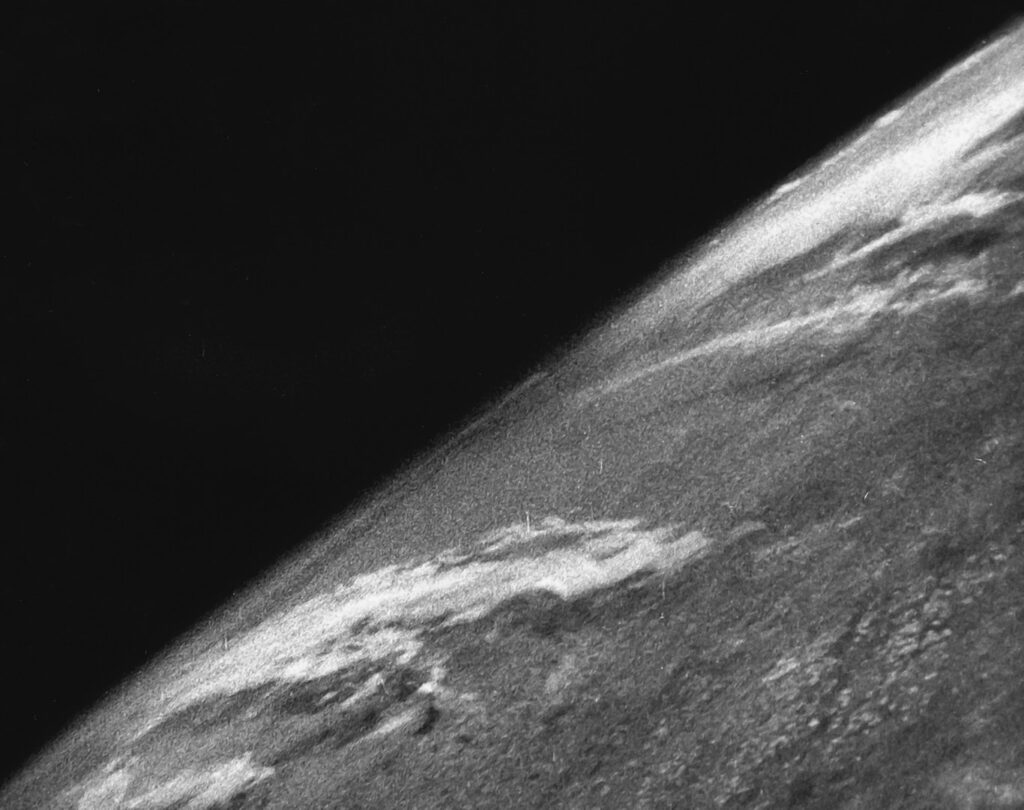
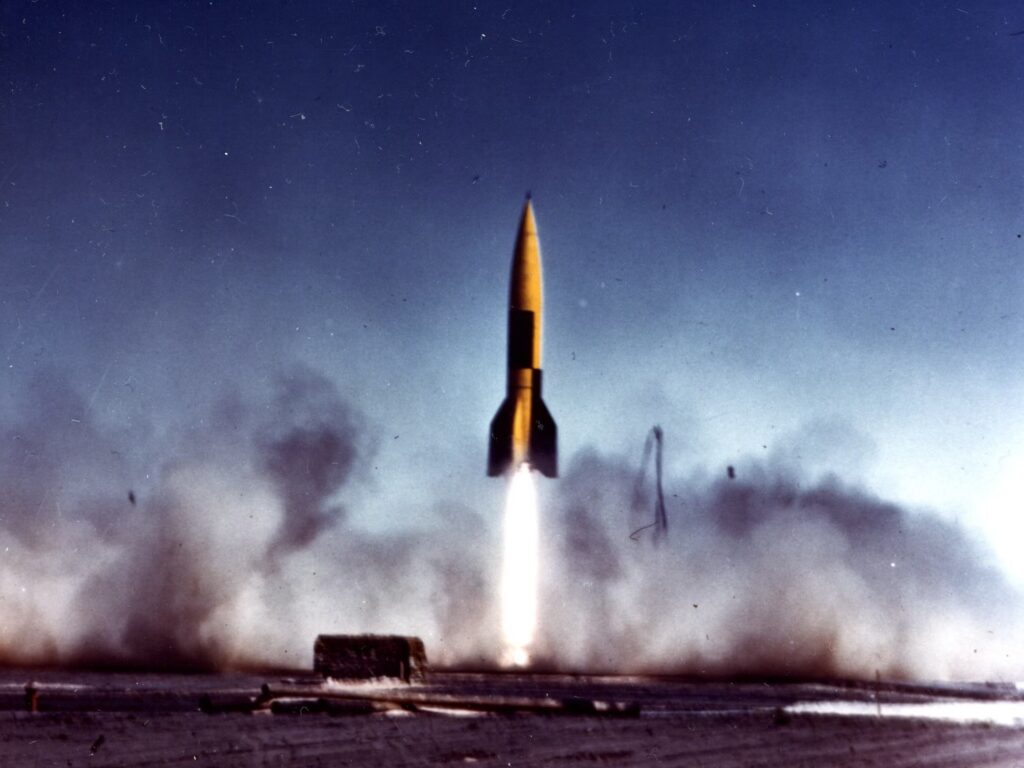
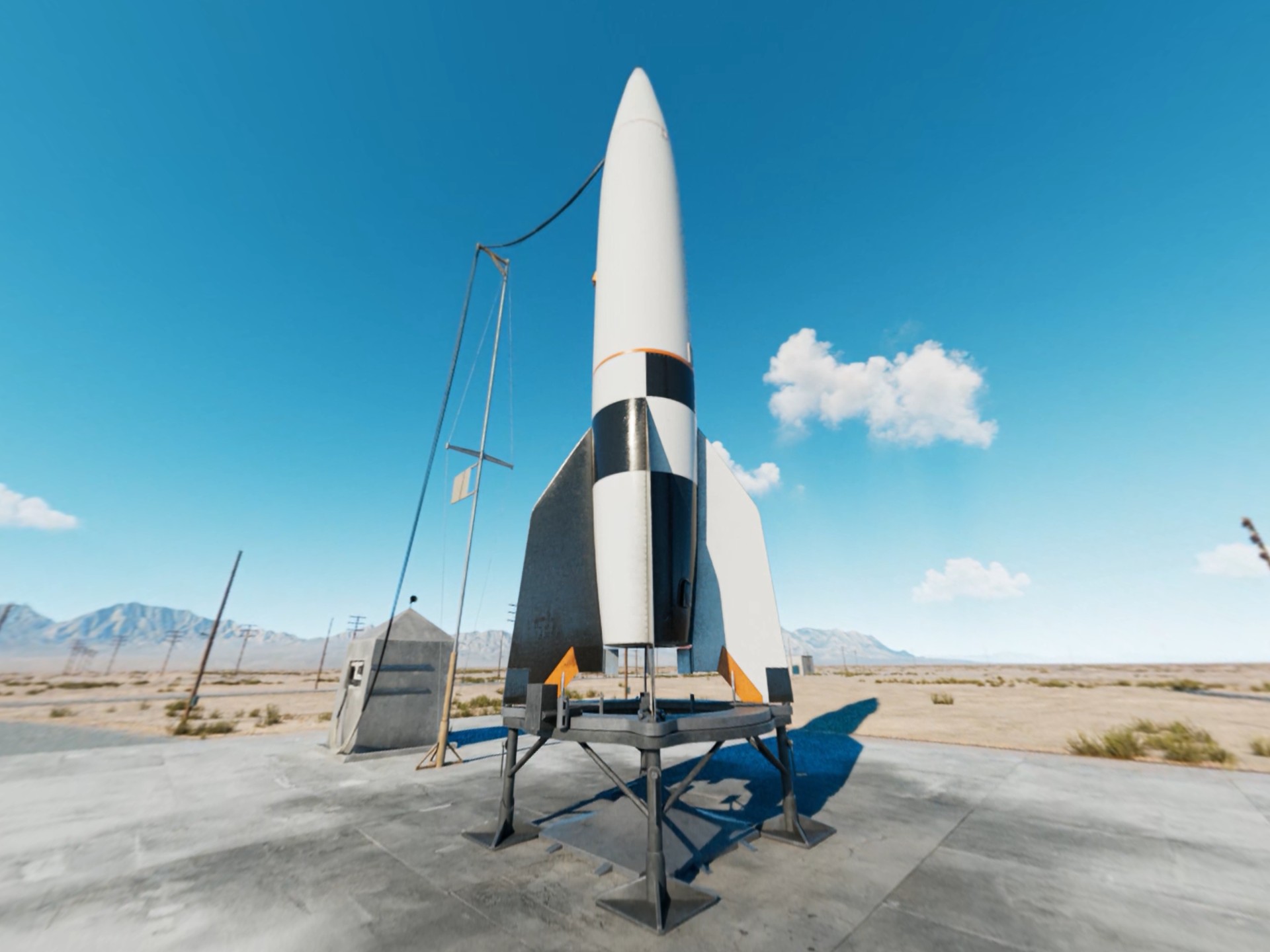
We continued our collaborative work by several international meetings, each time hosted by a country of our project members. The main outcome from our first meeting was the storyline of the show, also a first list of the topics we wanted to focus on and the idea to begin the show with something special, something that people usually do not connect with modern satellite technology! So, we decided to start the show with the first picture of the Earth from space, taken by a camera onboard a World War 2 V2 rocket.
After this milestone the main outline of the story was settled and we started to write the script. Furthermore, first animation tasks were distributed among the team. Thanks to the versatility of our group, we had many options for visualization. Of course, the main strength of our small production team was the SkyExplorer software in our planetariums, which allows fast creation of nice animations.
However, even SkyExplorer has its limits – so we decided the show to be a combination of all styles we would be able to bring to the table: in house blender skills, camera and drone equipment, expertise in data visualization, etc.
But we felt that some parts, mainly at the beginning of the show, would deserve a more refined touch. Therefore, we hired an external animator with a high end animation team to deliver some of the shots: UMA Vision from Ukraine.
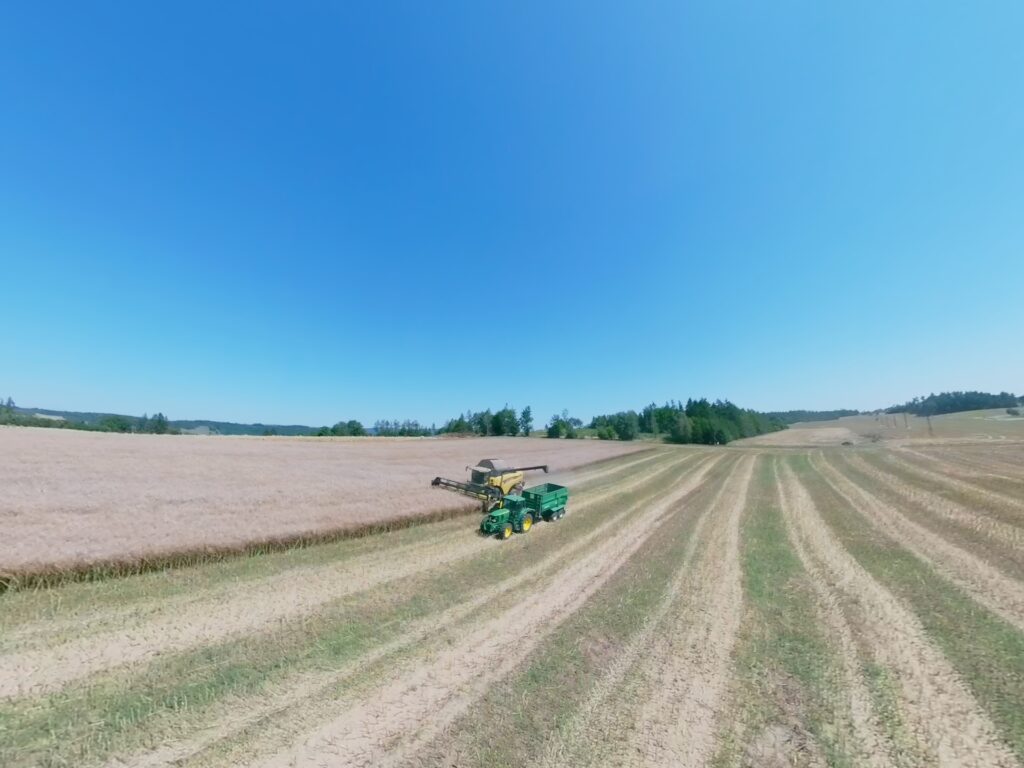
Even in contrast with CGI the live action footage was nonetheless challenging. Not only in terms of finding the right locations for our scenes, but mainly due to weather conditions and the seasons! What difference does it make if you have multiple reminders for August to record a footage of a harvest, if the summer has been so hot and dry that it rescheduled the harvests nearly a month sooner? Realizing that many fields are already empty while looking from a window put us into full panic mode. We decided to jump into our car and headed out to higher altitudes of Czech Republic, hoping we would find crops still waiting to be harvested.
As a precaution, we packed all our equipment – just in case. To our surprise, it took only a few tens of kilometer to arrive to a field, where the harvest was happening at the very moment. What do we want to have more, the owner was supervising the process! After a quick chat he allowed us to record everything and our luck did not end. The driver of the harvester agreed to have a fisheye camera mounted to the window of his vehicle. Now this is not a shot you get to see every day!
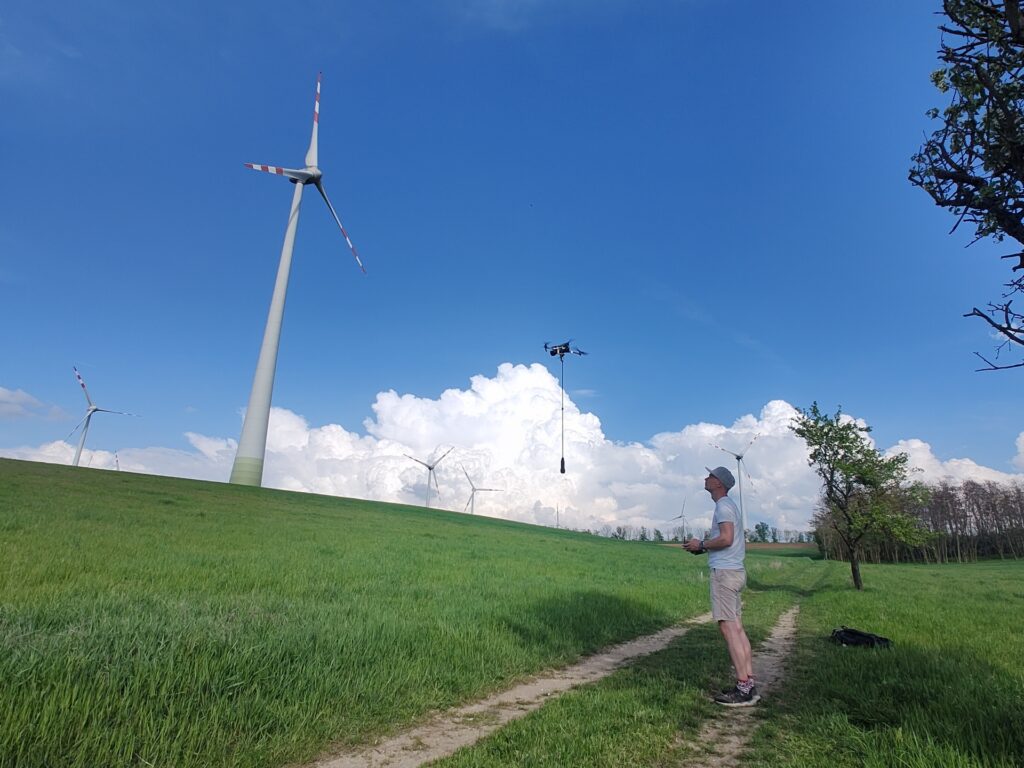
The strange looking drone attachment you see in the picture is actually a simple Insta360 camera, hanging underneath the drone in a distance large enough to have the drone as small as possible for removal from the image. This approach allows us to create drone fisheye footage in a very cheap way, while also allowing us to adjust camera angle in post-production.
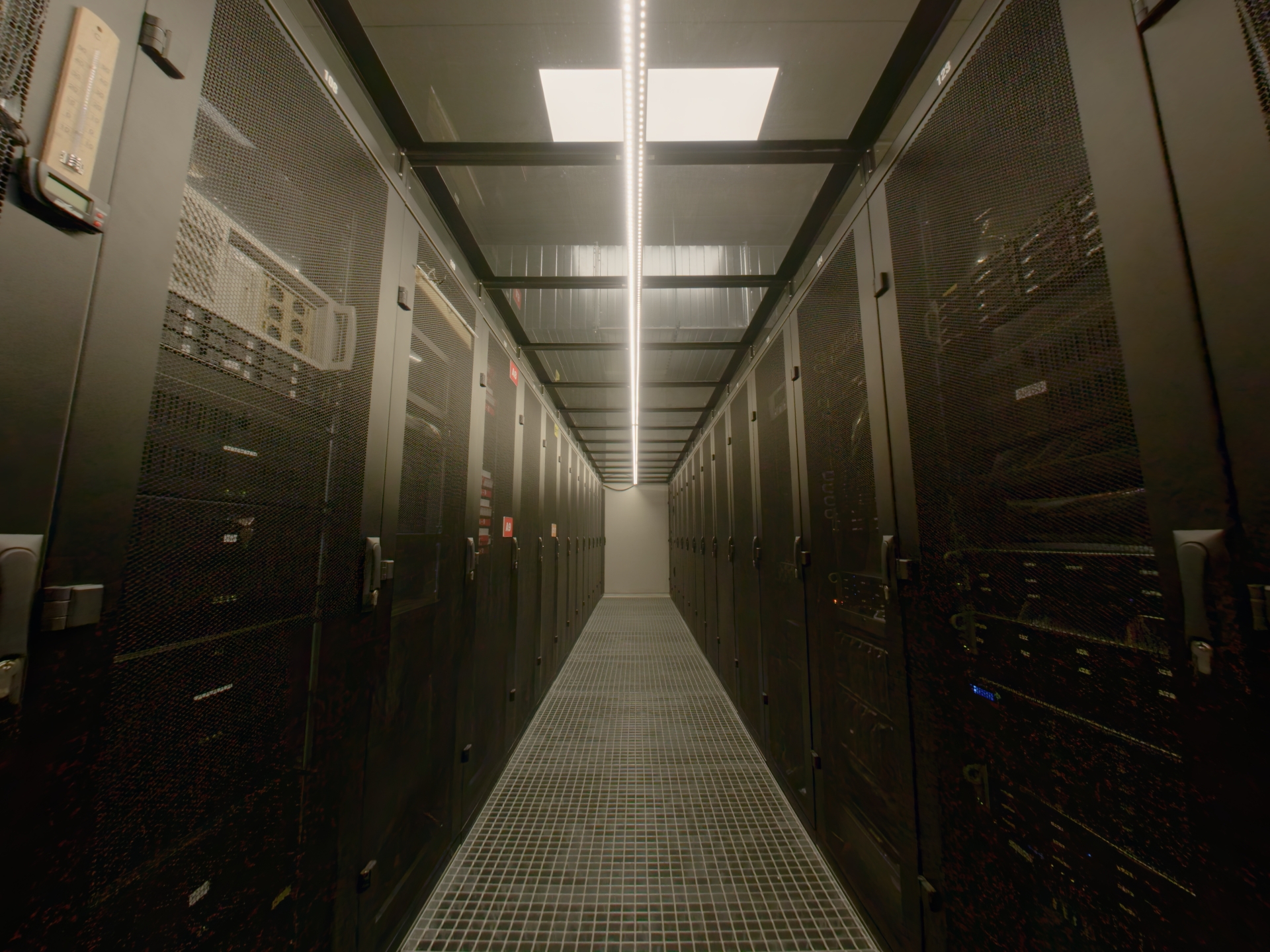
Luckily, not all live action shots are so weather dependent – especially the indoor ones. But nevertheless, they can be challenging. A video of a blinking server room of FASTER.CZ company might be an easier one. However, recording a room full of space engineers at work can seem like a piece of cake until they realize they are on camera. Suddenly, even everyday routine becomes difficult and clumsy. Anyway, no satellite part came to any harm.
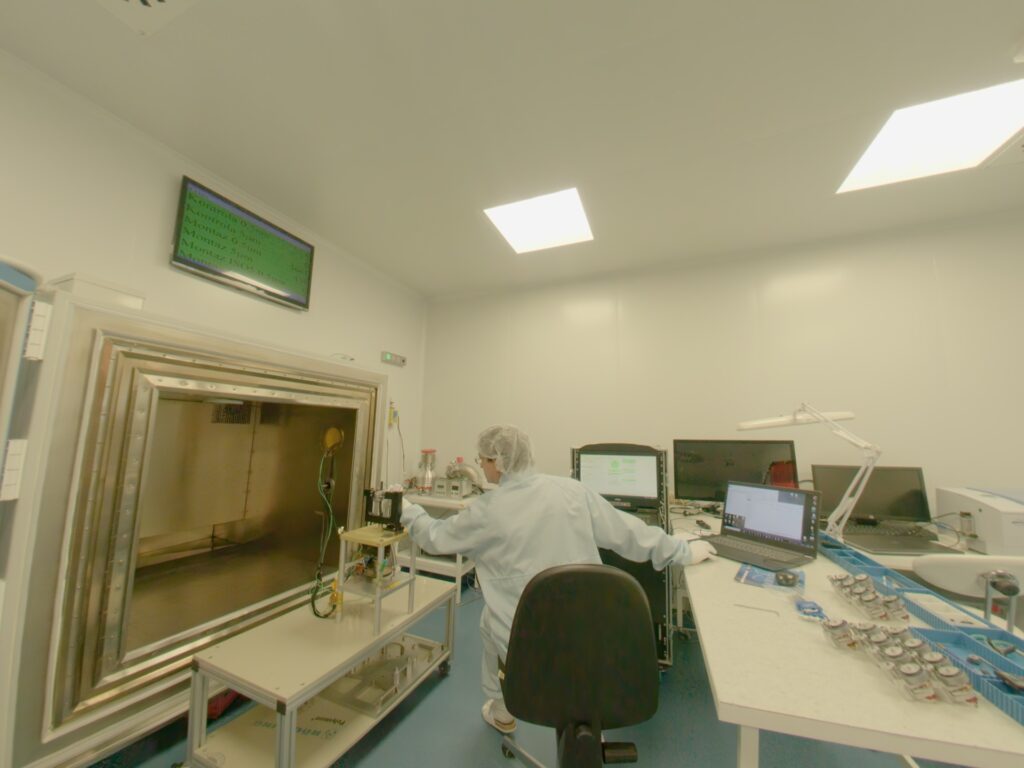
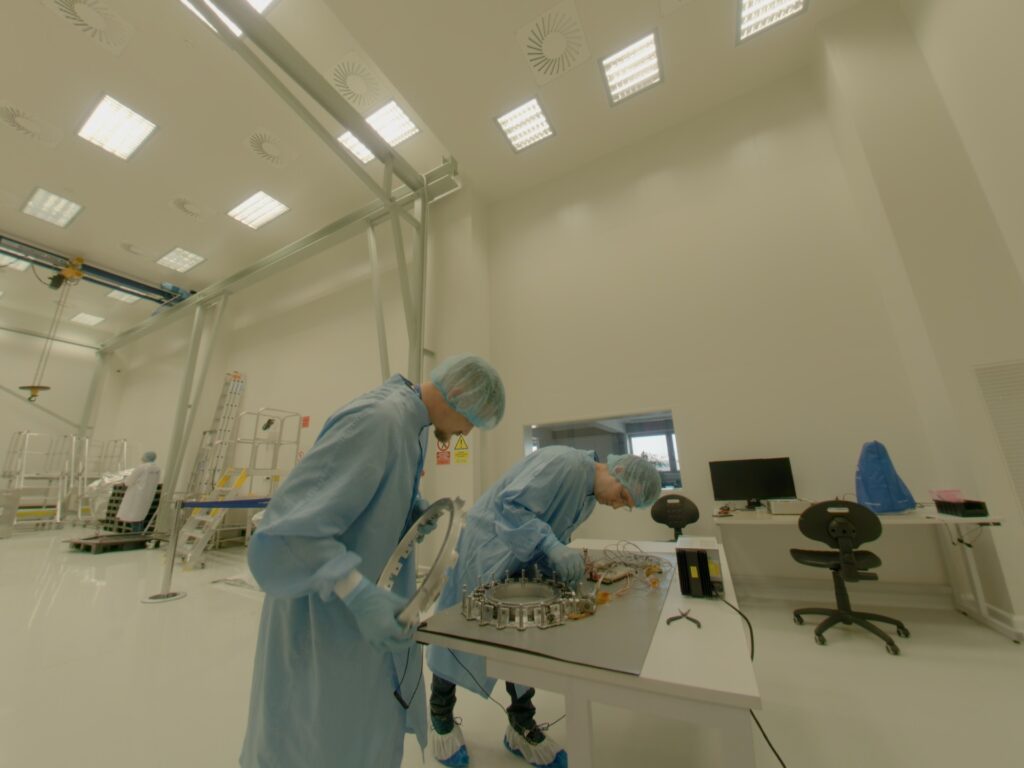
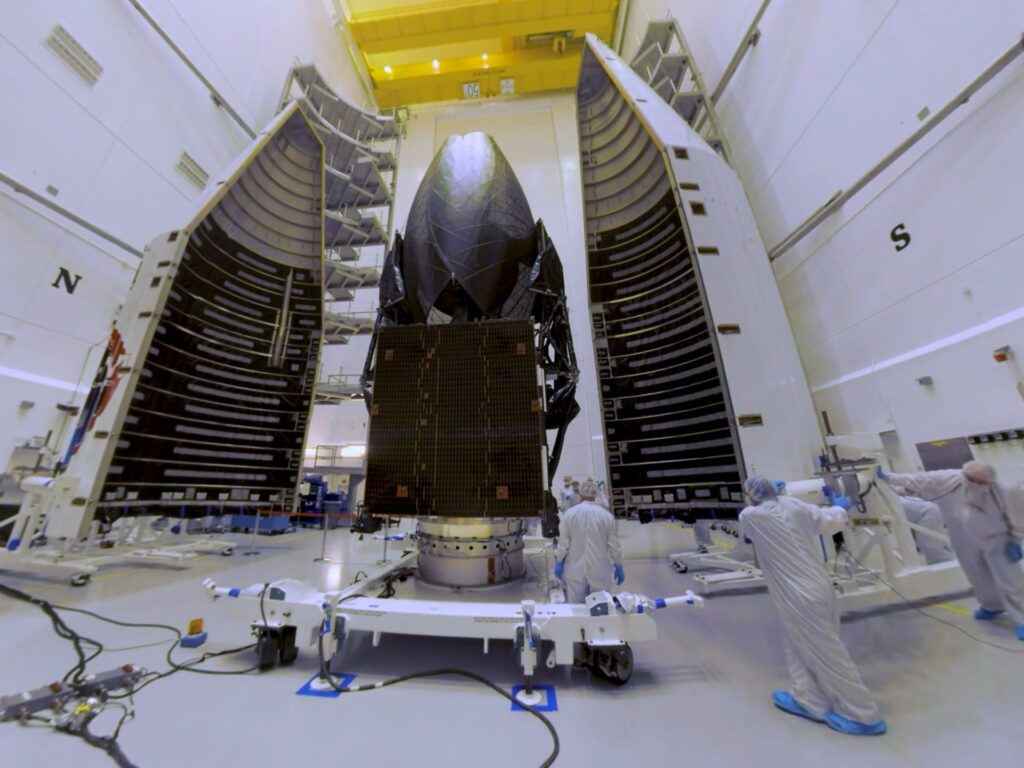
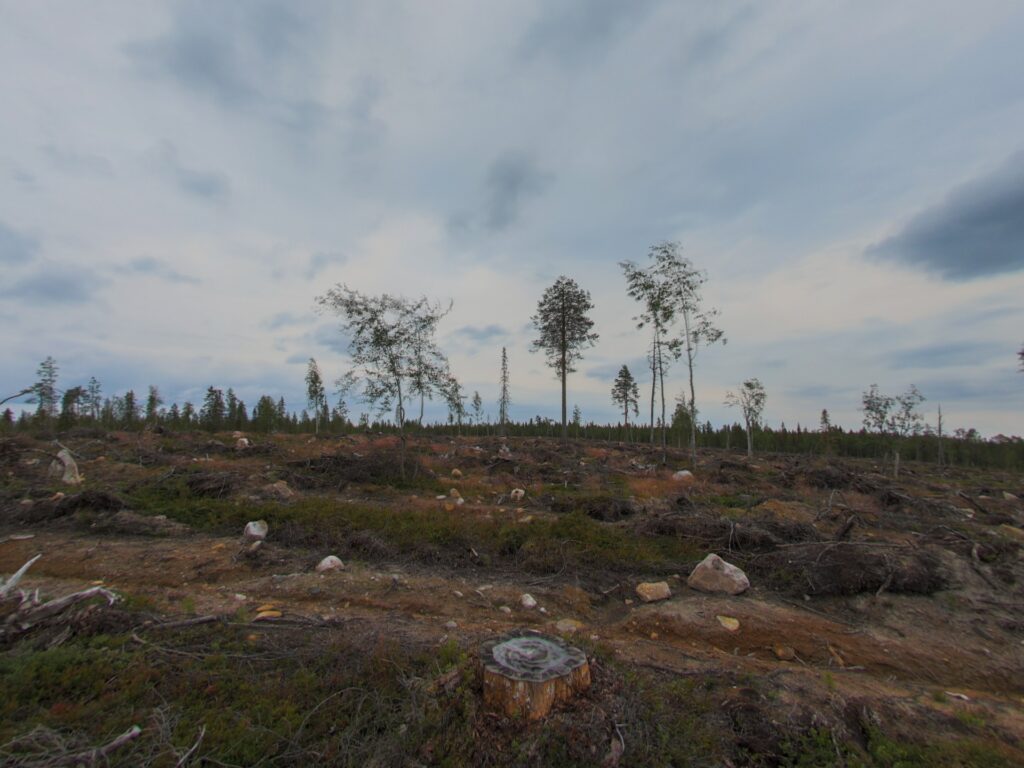
A very common situation is using footage from one’s archives. It very often happens that you shoot something you do not use immediately and you store it in your “for future use” drawer. Reaching into this drawer and picking up long forgotten material that fit your needs perfectly is priceless. And sometimes it is not even your own drawer: sometimes you reach out to your friends and colleagues from the fulldome community, who are willing to share their works to be used in your show.
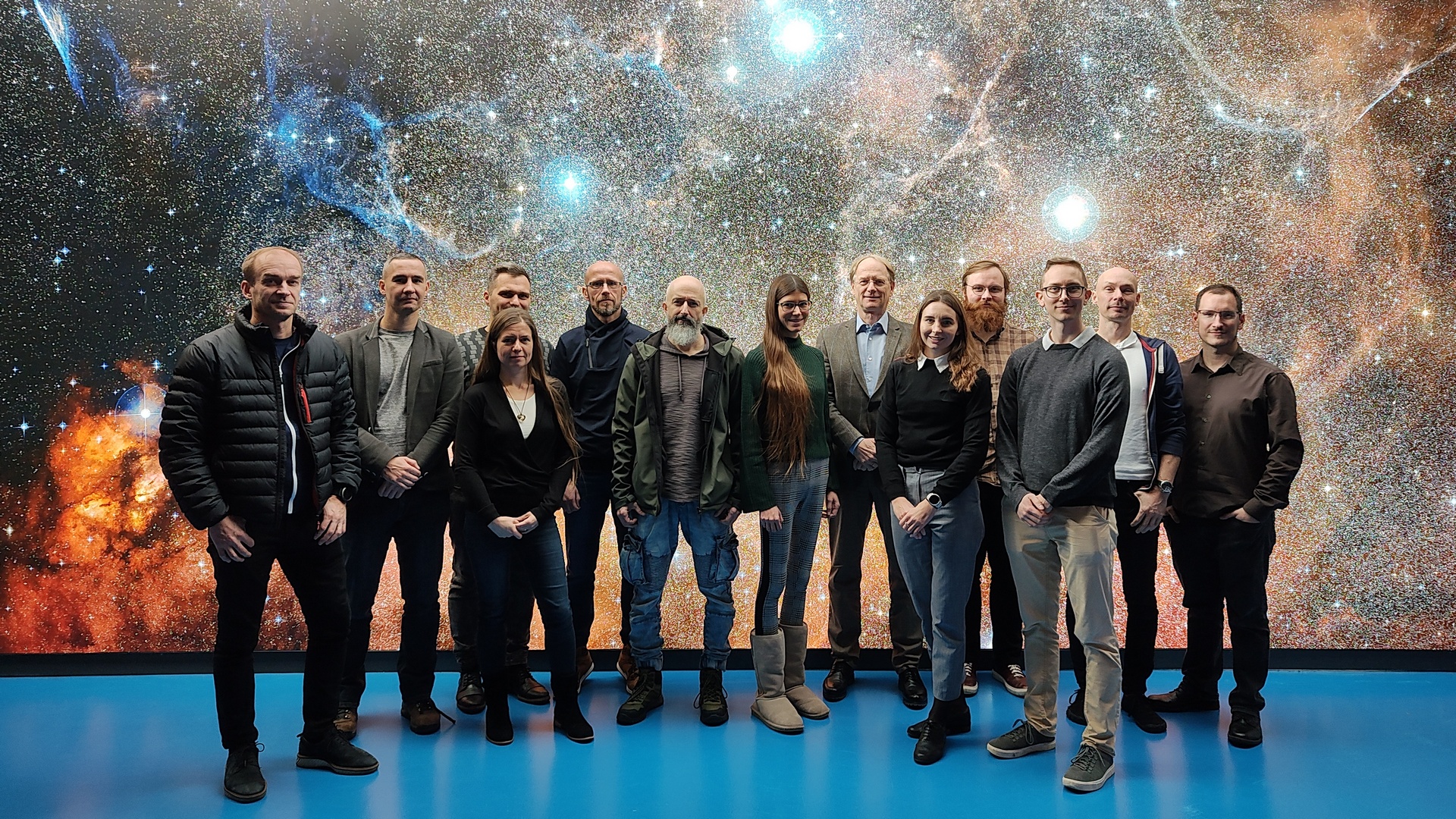
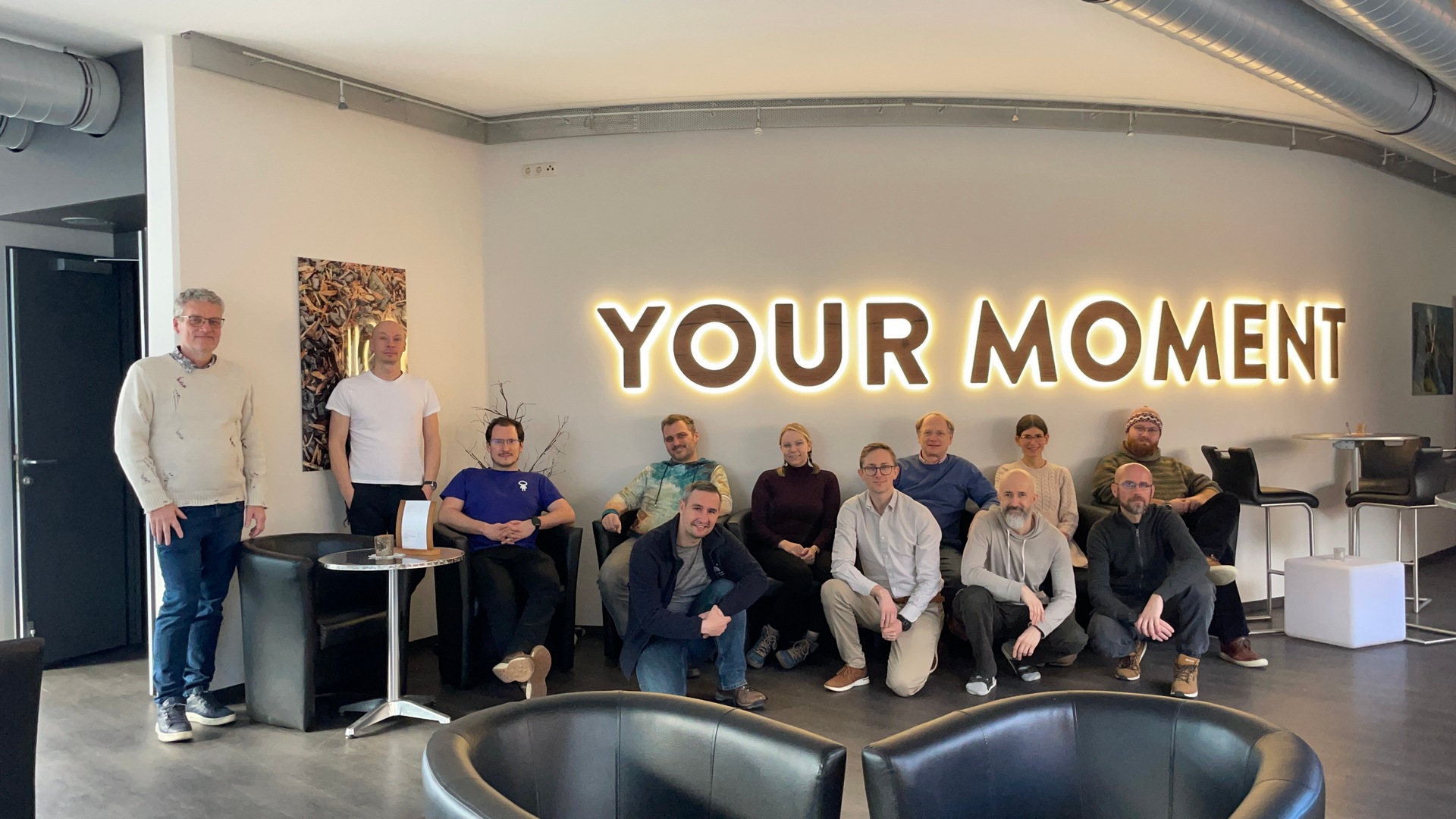
Emails and video calls are a valuable tool, but they are nothing compared to opportunities when the whole team is able to meet in one place and go over everything that has been done so far in order to discuss and dissect all the updates. For doing so, we met every few months in one of the countries of the project members. This also allowed us to visit the partner institutions and to peak into their activities. After all, networking and experience sharing has always been an important and very inspiring part of the project.
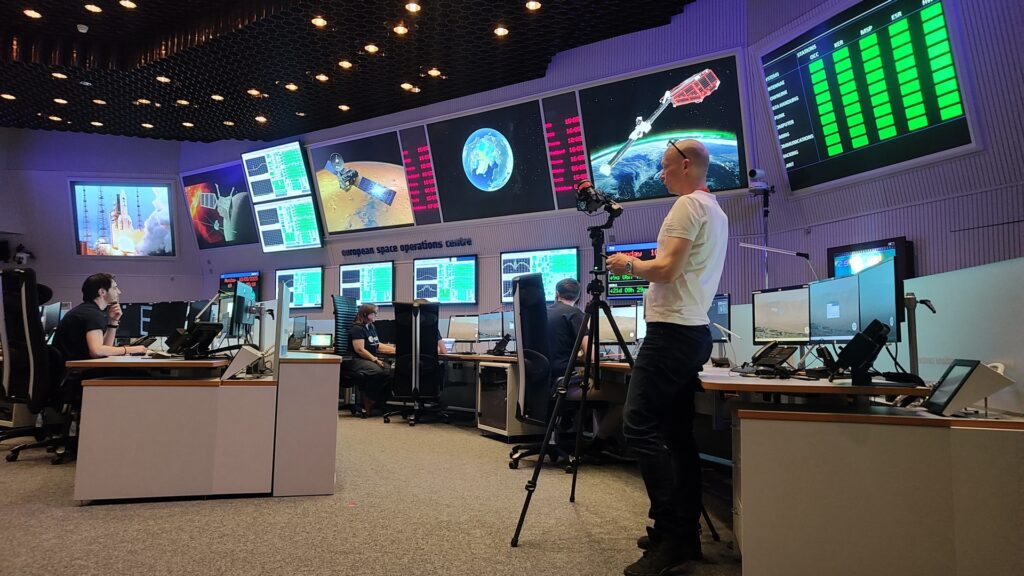
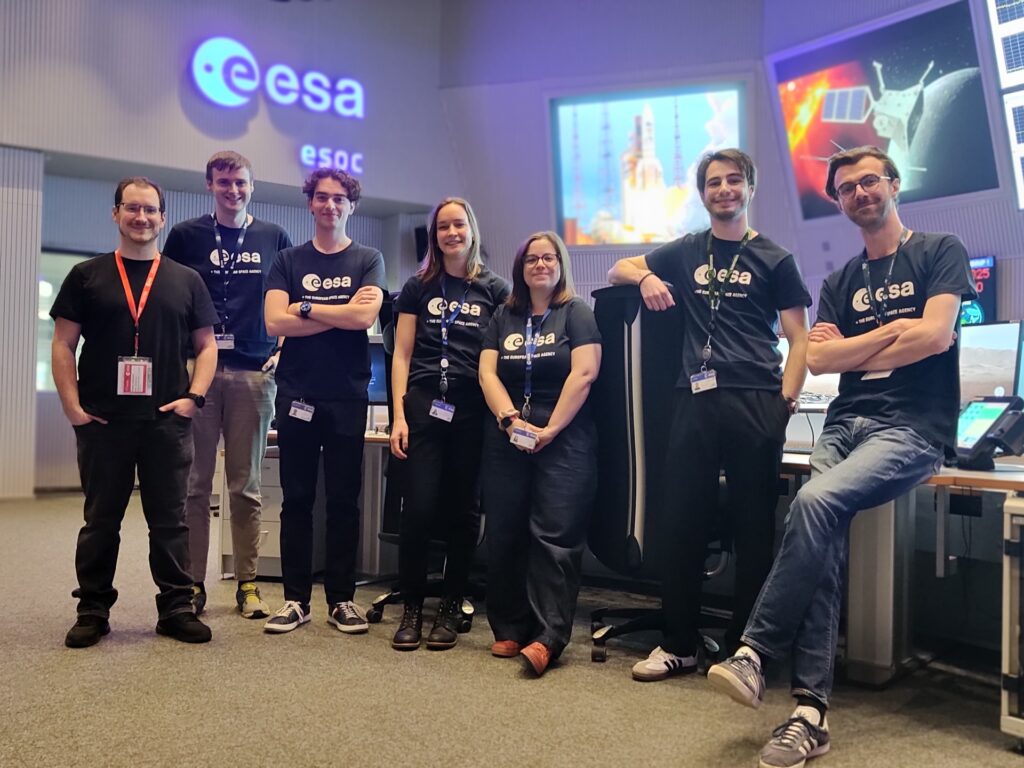
And since the show’s primary focus is the popularization of the Copernicus Program, where else should we shoot a scene than in Darmstadt, in the Main Control Room of the European Space Operation Center of ESA? Thanks to Maya Heins we could visit the center with our equipment and experiment on site with the help of a few volunteers.
With all this material available it was finally time to put it all together. Of course, as it happens, you usually run into two most common and unpleasant situations when editing the final output. You either have too much material and you simply cannot use everything you would love to or you actually find out that the scene looks completely different and you need to redo some animations, take off with the drone one more time or sometimes even rethink the whole scene… We must say that we have run into all the thinkable and unthinkable situations. But with the show finally taking shape we started working on the music, fine-tuned the script and recorded the final English narration.
And the result? See for yourself…